Loading
Loading

Volkswagen, meaning "the people car" in German, was founded in 1937 by the German Labor Front under the Nazi regime to produce an affordable car for the masses. Ferdinand Porsche designed the original Volkswagen, which would become known as the Beetle. The factory at Wolfsburg was built specifically for this car but produced military vehicles during World War II instead.
After the war, the Volkswagen factory came under British control, and production of the Beetle began in earnest. The Beetle became the best-selling car of all time, with over 21 million units produced between 1938 and 2003, though the overwhelming majority were built after 1945. The Beetle design remained fundamentally unchanged for decades, becoming a symbol of post-war German economic recovery.
Volkswagen expanded its lineup with the Golf in 1974, designed by Giorgetto Giugiaro, which replaced the Beetle as the core Volkswagen model. The Golf has gone through eight generations and remains the brand best-selling model. Volkswagen acquired Audi in 1965 and later built the Volkswagen Group into a conglomerate including Porsche, SEAT, Skoda, Bentley, Lamborghini, and Bugatti.
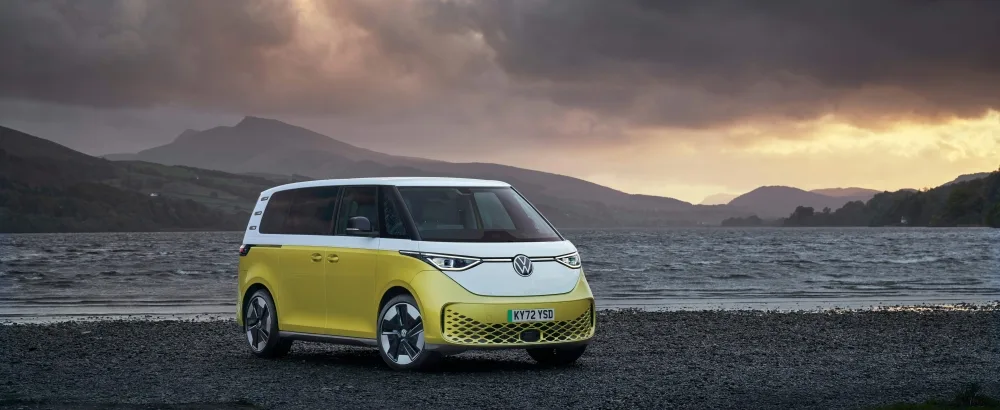
[Note: The 2015 diesel emissions scandal (Dieselgate) is not covered in detail here as it is well-documented elsewhere. Volkswagen admitted to installing defeat devices in diesel vehicles to pass emissions tests, resulting in over $30 billion in fines and settlements. The company has since committed to a major electric vehicle transition under the ID family.]
The Volkswagen Beetle used a rear-engine, rear-wheel-drive layout with a flat-four air-cooled engine, a configuration that was already unusual when the car entered mass production and remained so throughout its production run.
Volkswagen introduced the first production dual-clutch transmission (DSG) in the 2003 Golf R32. [Note: BorgWarner had developed the technology earlier, and some racing applications predate Volkswagen, but the R32 was the first mass-market application of a dual-clutch gearbox in a production passenger car.]
The Volkswagen ID.3 (2020) was the first model built on the dedicated MEB modular electric platform, designed to underpin multiple Volkswagen Group electric vehicles across several brands.
Volkswagen was an early adopter of turbocharged direct-injection (TSI) engines and diesel direct-injection (TDI), which allowed smaller-displacement engines to produce power equivalent to larger naturally aspirated engines with improved fuel efficiency.
The Volkswagen Phaeton (2002) was an ambitious attempt to create a luxury sedan that could compete with the Mercedes-Benz S-Class and BMW 7 Series, featuring a W12 engine and a six-figure price tag. It was commercially unsuccessful but demonstrated Volkswagen engineering ambition at the time.
The Gesellschaft zur Vorbereitung des Deutschen Volkswagens mbH was established, later renamed Volkswagenwerk GmbH.
Under British control, Volkswagen began mass-producing the Beetle, which would become the best-selling car in history.
The front-wheel-drive Golf, designed by Giorgetto Giugiaro, replaced the Beetle as Volkswagen core model and defined the hatchback segment.
Volkswagen introduced the first production dual-clutch gearbox in the Golf R32, a technology that has since become common across the industry.
The ID.3, first model on the modular MEB electric platform, marked Volkswagen entry into the dedicated EV era.
How the platform works for buyers and dealers