Loading
Loading

Peugeot is unique among automakers for its long industrial history: the company began in 1810 as a steel foundry and family mill, producing saws, coffee grinders, and bicycles before building its first car, a steam-powered three-wheeler, in 1889. By 1891 Peugeot had built its first internal-combustion car, an engineering achievement accelerated by collaboration with Gottlieb Daimler. Peugeot became a pillar of the French automotive industry, known for dependable family cars and innovative design.
The 201 series of 1929 introduced the nomenclature of three-digit names with a central zero. The 205 of 1983 saved Peugeot from financial collapse, becoming one of France's best-selling cars and a successful rally car. Peugeot has been a dominant force in endurance racing, winning the 24 Hours of Le Mans in 1992, 1993, 2009, and most recently with the 9X8 hybrid hypercar.
The brand became part of PSA Group, which merged with Fiat Chrysler in 2021 to form Stellantis. [Uncertain: the claim that Peugeot began in 1810 refers to the family business; the automobile division proper dates to 1889-1891. The 1810 date counts Peugeot family industrial activity before automobiles.]
Peugeot has been a leader in diesel engine technology, particularly with its HDi common-rail direct-injection systems developed in partnership with Ford. The Peugeot 205 Turbo 16 brought all-wheel drive and mid-engine layout to rally homologation specials, winning the World Rally Championship in 1985 and 1986.
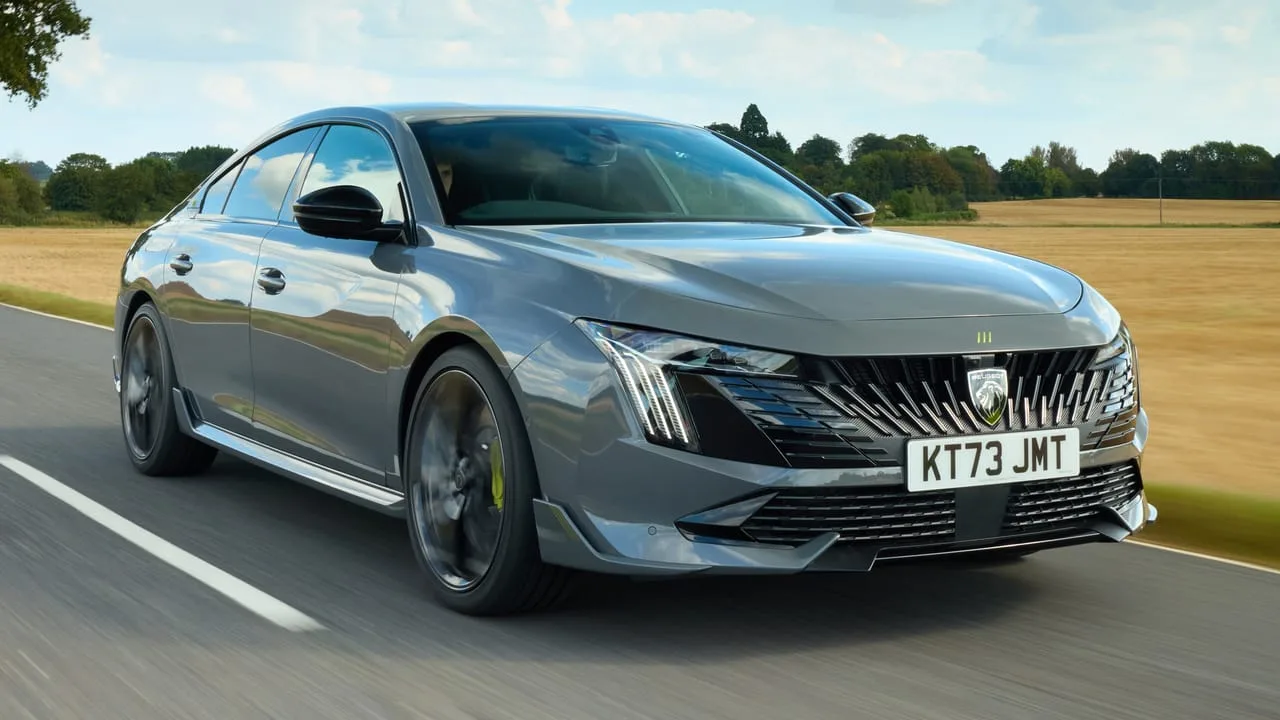
Peugeot's i-Cockpit design philosophy, introduced in 2012, features a small steering wheel positioned below the instrument cluster, requiring the driver to read gauges over the wheel rather than through it. This design has been divisive but distinctive across the lineup. Peugeot has also invested heavily in plug-in hybrid technology, offering electrified variants across most of its model range.
The e-208 and e-2008 represent Peugeot's current generation of electric vehicles. Peugeot's Lion emblem, updated multiple times, traces back to the company's origins in the Franche-Comte region, where the lion symbolized strength and endurance.
The Peugeot family establishes a steel foundry, beginning a manufacturing tradition that will later encompass automobiles.
Peugeot builds its first motor vehicle, a steam-powered three-wheeler, followed by an internal-combustion car in 1891.
The Peugeot 205 is launched, saving the company from financial crisis and becoming a beloved French icon.
Peugeot wins the 24 Hours of Le Mans for the first time with the 905, repeating the win in 1993.
Peugeot returns to top-tier endurance racing with the 9X8 hybrid hypercar, competing in the FIA World Endurance Championship.
How the platform works for buyers and dealers