Loading
Loading
Horacio Pagani, an Argentine-born engineer, moved to Italy in the 1980s with a dream of building the world's finest supercars. He joined Lamborghini, where he worked on projects including the Countach Evoluzione and the P140 prototype. Pagani's expertise in composite materials grew during this period, and he began developing carbon fiber manufacturing techniques that would later define his own cars.
Pagani Automobili was founded in 1992 in San Cesario sul Panaro, near Modena. The first Pagani model, the Zonda, debuted in 1999 with a Mercedes-AMG V12 engine and a body that combined art, science, and sculpture into a singular statement. The Zonda's immediate critical acclaim established Pagani as a serious hypercar manufacturer capable of competing with Ferrari and Lamborghini on their own terms.
The Zonda evolved through numerous variants over 12 years, each more extreme than the last. The Zonda F, Cinque, R, and Revolucion pushed the boundaries of what was possible with a mid-engined V12 platform. Limited production numbers and obsessive attention to detail made each variant a collector's item before it was even built.
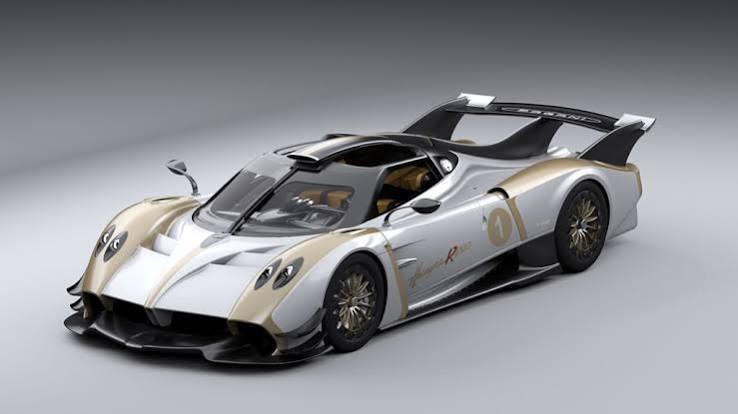
The Huayra, launched in 2011, represented a clean-sheet design. Named after the Inca god of wind, it featured active aerodynamics with four movable wing elements, a twin-turbo Mercedes-AMG V12, and an interior that set new standards for handcrafted luxury. The Huayra BC, Roadster, and R variants continued the evolution. Pagani has announced the Utopia, its third model line, as a continuation of the same philosophy: limited production, extreme engineering, and uncompromising artistry.
Pagani pioneered the use of Carbo-Titanium, a composite material that weaves carbon fiber with titanium threads for enhanced strength and energy absorption. This material, developed in partnership with the aerospace industry, allowed Pagani to achieve chassis rigidity and crash performance that was unmatched at the time.
The Zonda's four-exhaust outlet configuration became an iconic design signature. Beyond aesthetics, the system was engineered for optimal flow characteristics and thermal management, with each outlet serving specific cylinders to balance exhaust pressure and reduce backpressure.
The Huayra's active aerodynamic system, with independently movable flaps at each corner, was among the most sophisticated ever fitted to a production car. The system continuously adjusted downforce and drag based on speed, steering angle, and yaw rate, improving stability without the drag penalty of fixed aerodynamic surfaces. This technology influenced later hypercars from competitors.
How the platform works for buyers and dealers