Loading
Loading
The Morgan Motor Company was founded in 1910 by Henry Frederick Stanley Morgan in Malvern Link, Worcestershire. Morgan's first vehicle was a three-wheeled cyclecar, the Runabout, which won immediate acclaim for its lightweight design and lively performance. The three-wheeler formula defined the company through its early decades, with the Super Sports and Aero models becoming icons of British motoring.
Morgan introduced its first four-wheeled car, the 4-4, in 1936. The model name referred to its four wheels and four-cylinder engine, a naming convention that the company still uses today. The 4-4 remained in production for over 80 years, making it one of the longest-running production cars in history. Morgan survived World War II by building aircraft components, returning to car production in 1946 with renewed purpose.
The Plus 4 arrived in 1950 and became Morgan's most iconic model. Its combination of a lightweight wood-framed body, steel chassis, and Triumph or Rover engines created a driving experience that felt authentically connected to an earlier era of motoring. Morgan famously retained its traditional ash wood frame construction well into the 21st century, resisting industry trends toward mass production.
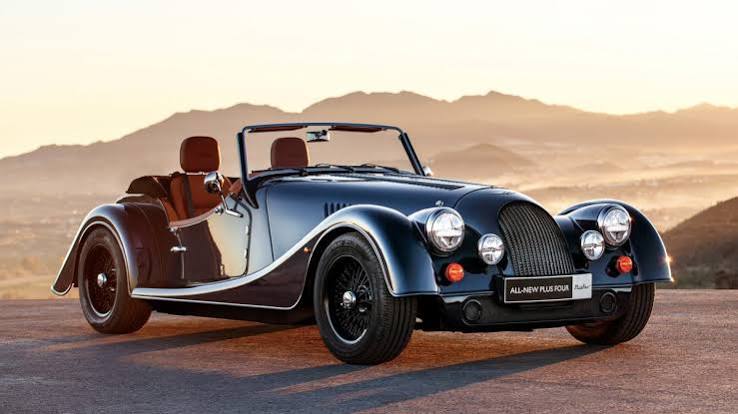
In recent years, Morgan has modernized without abandoning its heritage. The Aero 8 introduced aluminum chassis technology, and the current Plus Four and Plus Six models use bonded aluminum platforms with BMW engines. The company remains family-owned and operates from its original Malvern factory, still producing fewer than 1,000 cars per year by hand.
Morgan's ash wood frame construction, while often seen as a retro choice, was a practical engineering solution for low-volume production. Wood allowed for precise panel fitting without expensive stamping dies, and it provided natural vibration damping. The technique survived until the 2010s when Morgan transitioned to bonded aluminum.
The Morgan 4-4's extended production run from 1936 to 2018 is a testament to the soundness of its original design. Few vehicles in automotive history have remained in continuous production with such minimal fundamental change, and the model's longevity is itself an engineering achievement.
Morgan adopted BMW engines for its modern models, bringing competitive performance. The Plus Six achieves a 0-60 mph time of 4.2 seconds, performance that rivals dedicated sports cars while retaining Morgan's distinctive character. The company's willingness to source modern powertrains while preserving traditional coachbuilding methods represents a unique approach in the industry.
How the platform works for buyers and dealers