Loading
Loading
Colin Chapman founded Lotus Engineering in 1952 in London. Chapman was an engineer with a philosophy rooted in lightweight design and simplified engineering. His mantra, "Simplify, then add lightness," guided every Lotus product from the earliest kit cars to the most advanced racing machines.
Lotus achieved immediate success in Formula One, winning its first Grand Prix in 1960 and its first constructors championship in 1963. The Lotus 25 introduced the monocoque chassis to Formula One, a structural innovation that changed the sport permanently. Lotus won seven constructors championships between 1963 and 1978, with drivers including Jim Clark, Graham Hill, Jochen Rindt, Emerson Fittipaldi, and Mario Andretti.
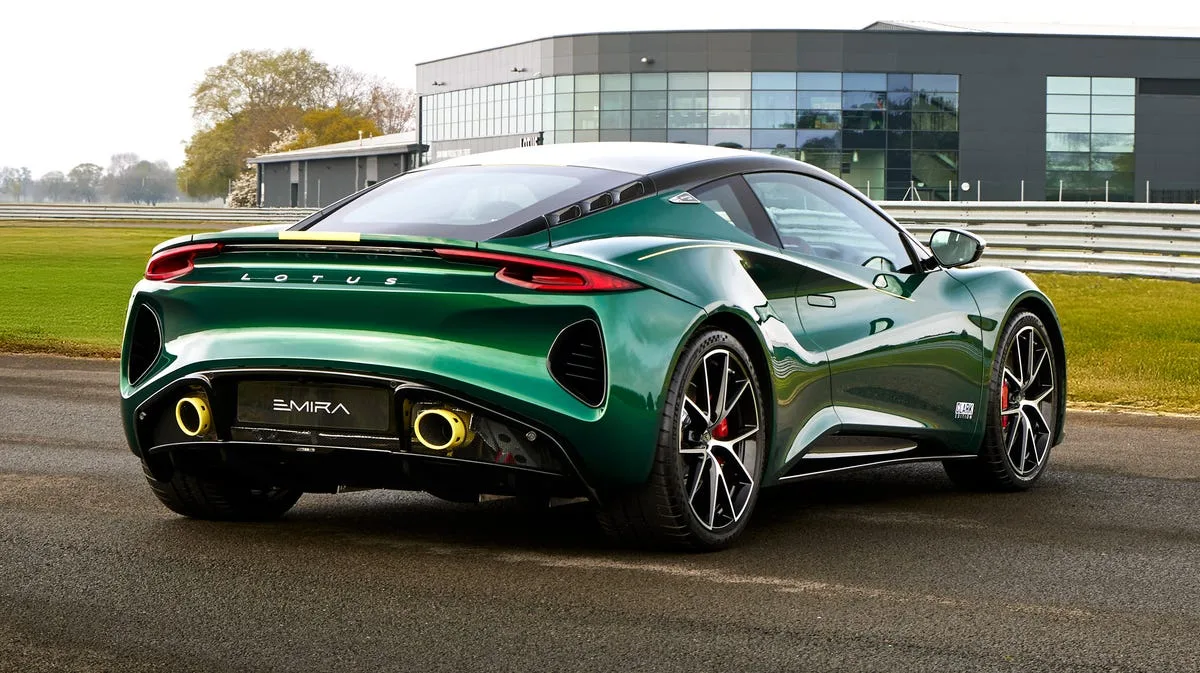
The road car division built a parallel reputation for focused, lightweight sports cars. The Seven, Elan, Esprit, and Elise each captured Chapman philosophy in a different era. After periods under General Motors, Proton, and DRB-Hicom ownership, Lotus is now part of Geely, which has invested in the Emira sports car and the Evija all-electric hypercar.
The Lotus 25 (1962) introduced the monocoque chassis to Formula One, replacing the traditional spaceframe with a stressed-skin structure that was lighter and stiffer.
The Lotus 79 (1978) pioneered ground-effect aerodynamics in Formula One, using undersides tunnels to generate downforce, a concept that dominated the sport for years.
The Esprit (1976) featured a wedge-shaped Giorgetto Giugiaro design and became the first Lotus with a turbocharged engine in 1980.
The Elise (1996) used an extruded and bonded aluminum chassis that weighed only 68 kg, reviving Chapman lightweight philosophy for the modern era.
Colin Chapman founded Lotus Engineering in London, initially building and selling kit cars.
The Lotus 25 Formula One car introduced the monocoque chassis, a structural innovation that transformed racing car design.
The Lotus Esprit, designed by Giorgetto Giugiaro, became an icon through its appearance in the James Bond film The Spy Who Loved Me.
The Elise returned Lotus to its lightweight roots with an innovative bonded aluminum chassis weighing just 68 kg.
Lotus launched the Emira, its final internal combustion sports car, and the Evija, a 2,000 hp all-electric hypercar.
How the platform works for buyers and dealers