Loading
Loading

Lexus was created by Toyota Motor Corporation as a luxury brand to compete with established German and American premium marques. The development program, code-named F1 (Flagship One), began in 1983 and involved 60 designers, 24 engineering teams, 1,400 engineers, and 2,300 technicians over six years.
The first Lexus model, the LS 400, launched in 1989 with a 4.0-liter V8 engine and a focus on exceptional refinement, silence, and reliability. It was developed at a cost of over $1 billion and immediately established Lexus as a credible luxury contender. [Note: the $1 billion figure is a widely cited estimate, but exact development costs for the LS 400 were not disclosed by Toyota and may be higher or lower in real terms.]
Lexus expanded quickly with the ES sedan (1989), SC coupe (1991), and the RX SUV (1998), which created the luxury crossover segment. The IS sedan (1999) brought Lexus to the compact sport sedan market.
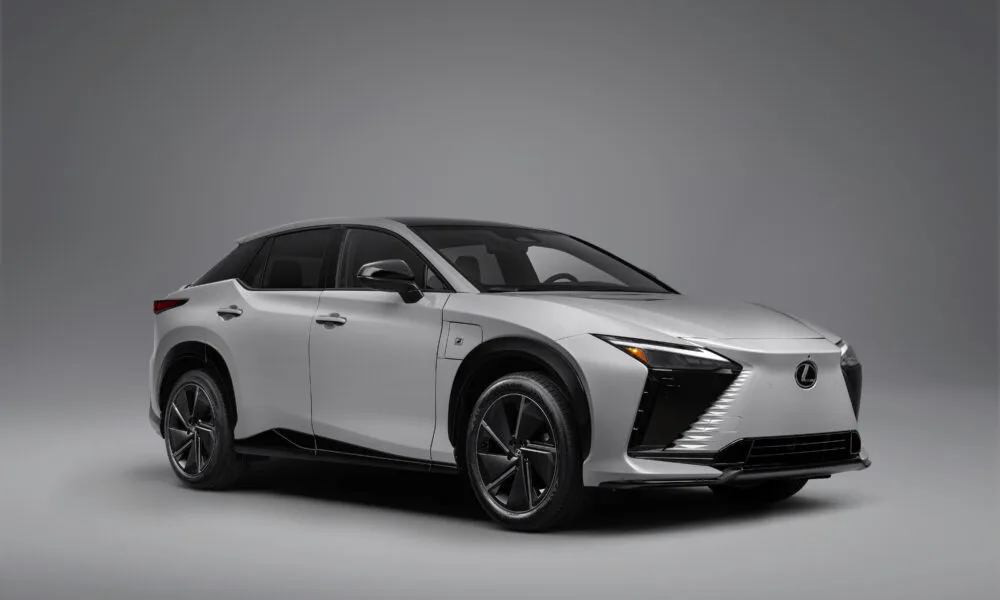
The brand has led the J.D. Power Initial Quality Study multiple times and consistently ranks among the most reliable automotive brands. Lexus introduced the first luxury hybrid, the RX 400h, in 2005 and has since hybridized most of its lineup, though it has been slower than some competitors to introduce fully electric models. The RZ 450e (2022) was the brand's first dedicated electric vehicle.
The LS 400 (1989) was the first production car with an electronically controlled variable-assist power steering system that adjusted effort based on vehicle speed.
The Lexus RX (1998) was the first mass-market luxury crossover utility vehicle, a segment that has since become the dominant form of premium vehicle in many markets.
Lexus introduced the first luxury hybrid powertrain with the RX 400h (2005), using Toyota Hybrid Synergy Drive technology.
The LFA (2010) was Lexus's first and only V10 supercar, with a 4.8-liter engine developed with Yamaha that revved to 9,000 rpm. Production was limited to 500 units.
Lexus has used a continuously variable transmission with a physical first takeoff gear in its Direct Shift CVT (2018), a design that improves low-speed response compared to conventional CVTs.
Toyota chairman Eiji Toyoda initiated a secret project to develop a world-class luxury sedan, code-named F1 (Flagship One).
The Lexus LS 400 launched at the Detroit Auto Show, immediately establishing Lexus as a luxury contender with exceptional refinement and reliability.
The RX 300 created the luxury crossover segment, combining SUV utility with car-like ride and handling.
The LFA V10 supercar demonstrated Lexus engineering ambition, though its limited production run meant it had little commercial impact on the brand.
The RZ was Lexus first dedicated electric vehicle, built on the e-TNGA platform shared with the Toyota bZ4X.
How the platform works for buyers and dealers