Loading
Loading

Dacia was founded in 1966 by the Romanian government as a state-owned automobile manufacturer, built in collaboration with Renault under the Ceausescu regime. The first Dacia, the 1100, was a licensed version of the Renault 8. But the defining model was the Dacia 1300 (1969), based on the Renault 12. It became the backbone of Romanian motoring for over three decades, continuing in production until 2004 with minimal changes , over 1.9 million were built. The 1300 was rugged, simple to repair, and capable of surviving Romania's often poor roads.
After the 1989 revolution, Dacia struggled through a difficult transition to a market economy. Renault acquired a majority stake in 1999 and made Dacia the centrepiece of a radical value-engineering experiment: build genuinely affordable cars using proven Renault platforms, stripped of complexity rather than stripped of quality. The 2004 Logan was the first result, a no-frills saloon that undercut competitors by roughly 40 percent while offering surprising interior space and Renault-sourced reliability.
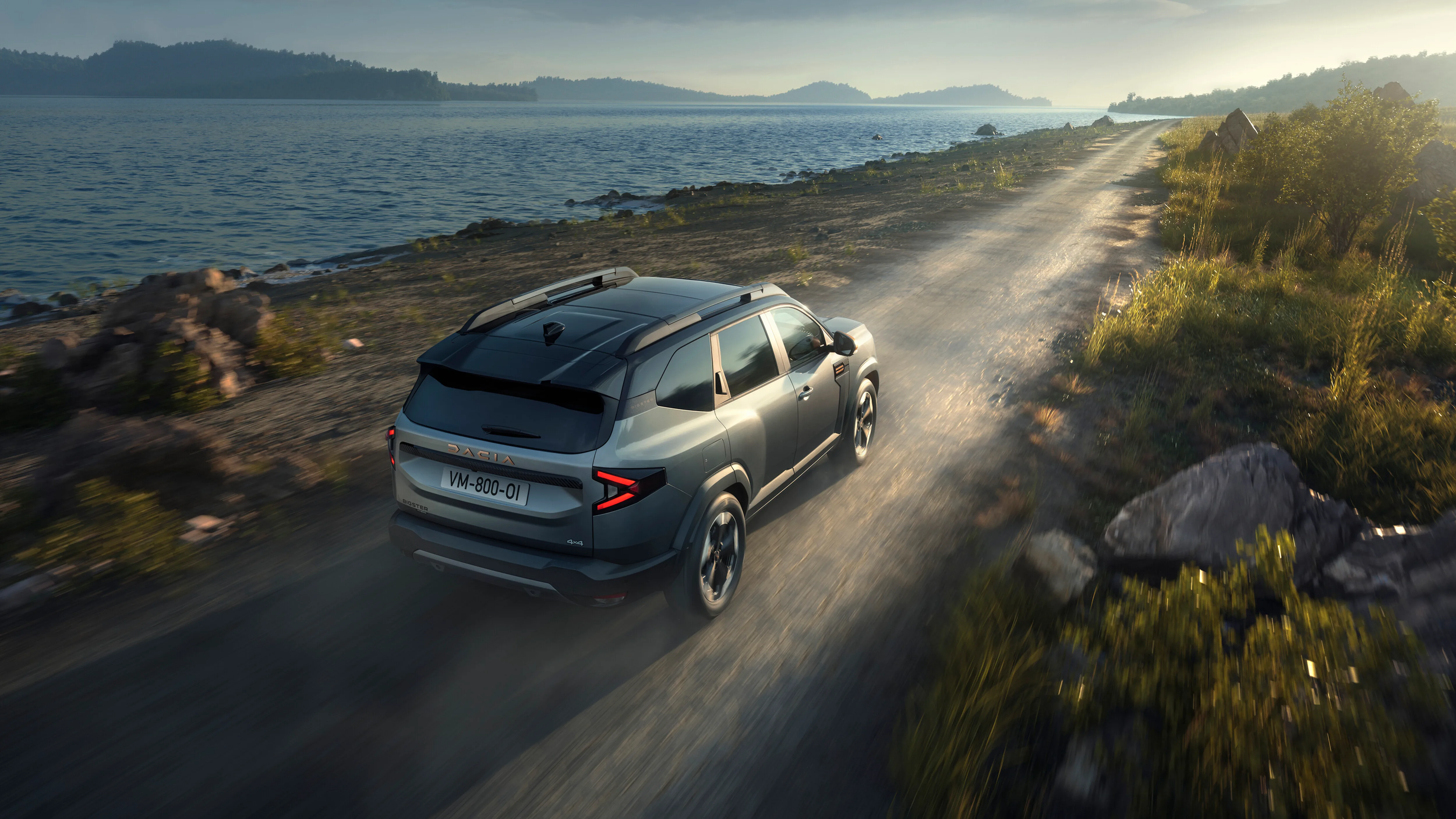
The Logan was a global success, particularly in emerging markets. Dacia expanded with the Sandero hatchback (2007), the Duster SUV (2010), and the Jogger seven-seat estate (2021). Dacia has maintained its value positioning while gradually improving design, safety, and refinement. The brand's current lineup includes hybrid powertrains, and Dacia has become one of Europe's most profitable volume brands by focusing on what customers actually need and nothing more.
Dacia's "value engineering" approach , stripping away cost without stripping away function , was a radical departure from the automotive industry's trend toward ever-increasing complexity and cost. The Logan's development cost was reported at just over EUR 500 million, a fraction of what competitors spent on comparable new models.
The Dacia Duster proved that a rugged, off-road-capable SUV could be sold for well under EUR 20,000, creating a segment that barely existed before. It became one of Europe's best-selling SUVs and demonstrated that the "cheap SUV" concept had enormous pent-up demand.
Dacia's "YouClip" accessory system (introduced with the third-generation Duster) is a modular mounting rail system that allows owners to attach accessories , phone holders, cupholders, flashlights, storage nets , at various points around the cabin. It is an inexpensive but genuinely useful innovation that reflects Dacia's philosophy of practical simplicity.
The Romanian state-owned automaker was established, built in cooperation with Renault.
Based on the Renault 12, the 1300 became Romania's defining car, with over 1.9 million built over 35 years.
Dacia's first post-Renault-acquisition model proved that genuinely affordable new cars could be profitable and desirable.
The Duster created the budget SUV segment and became one of Europe's best-selling SUVs.
How the platform works for buyers and dealers