Loading
Loading

BYD (Build Your Dreams) was founded in 1995 by Chinese chemist and entrepreneur Wang Chuanfu as a rechargeable battery manufacturer. The company rapidly became one of the world's largest producers of nickel-cadmium and lithium-ion batteries, supplying major electronics brands including Nokia, Motorola, and Apple. BYD entered the automobile industry in 2003 by acquiring the bankrupt Tsinchuan Auto Company. The company's first car, the BYD F3 (2005), was a compact sedan that heavily resembled the Toyota Corolla and established BYD as a volume producer.
BYD's battery expertise gave it a unique advantage in the emerging electric vehicle market. The company introduced the world's first production plug-in hybrid, the F3 DM, in 2008, and followed with the e6 electric crossover in 2010, one of the first mass-market EVs. However, early BYD cars were criticised for poor build quality and derivative designs. The company invested heavily in improving quality, design, and technology, hiring former Audi design chief Wolfgang Egger in 2016, and former Ferrari and Mercedes-Benz design directors.
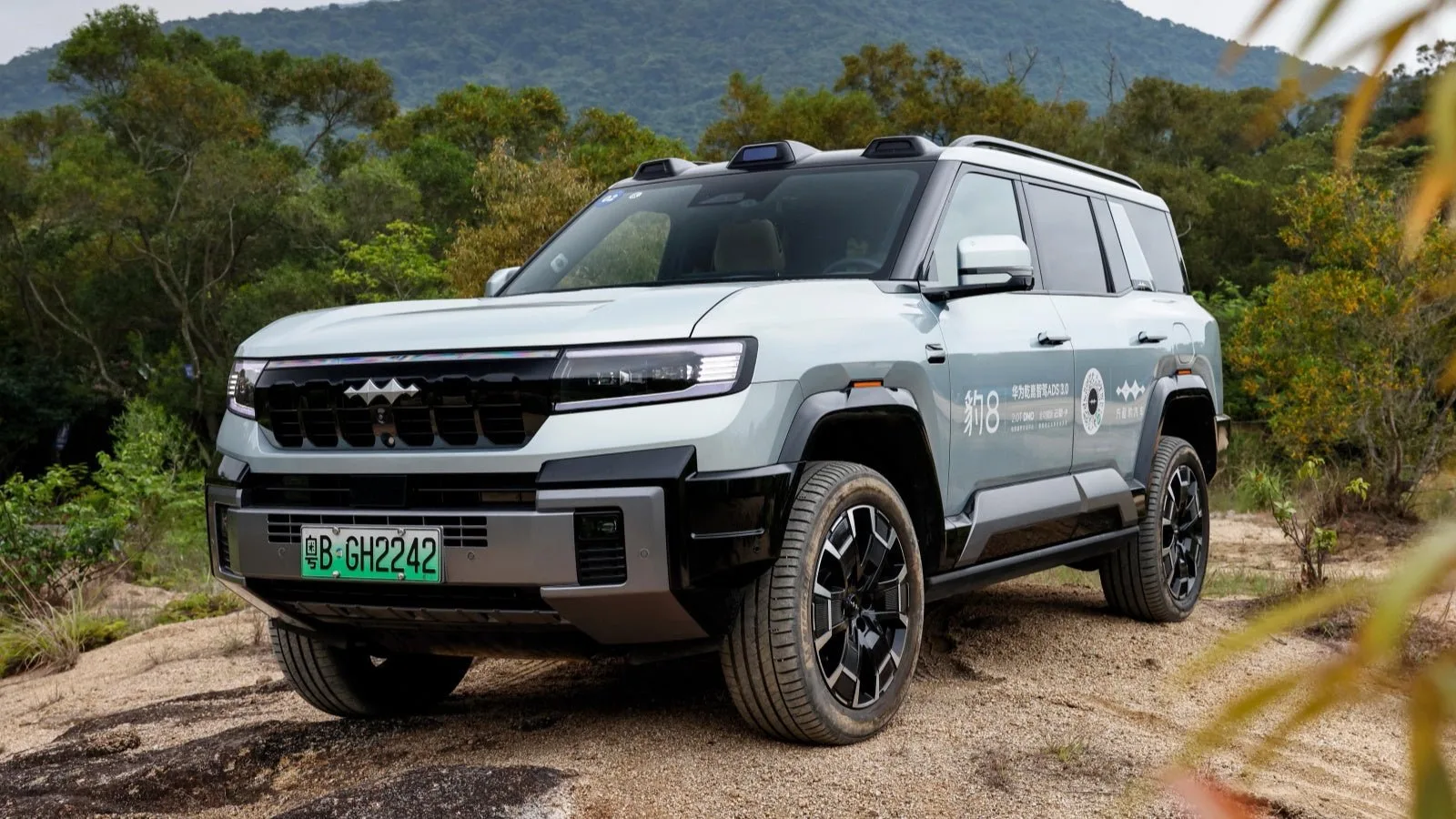
BYD's transformation accelerated dramatically after 2020. In 2021, BYD introduced the "Blade Battery" , a lithium-iron-phosphate (LFP) cell design that dramatically improved safety and packaging efficiency. In 2022, BYD became the world's best-selling NEV (New Energy Vehicle) manufacturer, surpassing Tesla in total plug-in vehicle sales. The company's product lineup now spans from the affordable Dolphin and Atto 3 to the luxury Han sedan, the Yangwang U8 off-roader, and the Fangchengbao brand. BYD also builds electric buses, trucks, monorails, and stationary energy storage systems, and remains one of the world's largest battery manufacturers.
BYD's Blade Battery represents a fundamental rethink of lithium-iron-phosphate battery cell design. Instead of traditional cylindrical or prismatic cells packaged into modules and then into a pack, BYD's cells are long, flat "blades" that act as structural members of the battery pack itself. This cell-to-pack design achieves higher energy density than conventional LFP packs while passing nail-penetration tests without fire or thermal runaway , a safety benchmark that traditional LFP and NCM chemistries struggle to match.
BYD's DM-i (Dual Mode , intelligent) plug-in hybrid system uses a fundamentally different architecture from conventional PHEVs. Instead of a traditional transmission, DM-i uses a large electric motor as the primary drive source, with a dedicated gasoline engine that either charges the battery or drives the wheels directly at highway speeds via a single-speed fixed-gear ratio. This "mostly EV" approach delivers fuel consumption of approximately 1-2 litres per 100 kilometres in real-world use without requiring plug-in charging to achieve good efficiency.
BYD's e-Platform 3.0 is a dedicated EV architecture that integrates the Blade Battery into the vehicle's structural floor as a stressed member, achieving a rear-drive or all-wheel-drive layout with a 50:50 weight distribution, 800-volt architecture, and a thermal management system that uses a heat pump to achieve exceptional cold-weather range retention. [Uncertain: the 800-volt claim; some BYD models (like the Dolphin and Atto 3) use approximately 400-volt architecture, while the Han EV and higher-end models use the 800-volt CTB system. The exact voltage varies by model and market.]
The battery manufacturer was established in Shenzhen, quickly becoming a major supplier to the electronics industry.
BYD acquired Tsinchuan Auto and began building its own cars, leveraging its battery expertise.
The F3 DM was the first mass-produced plug-in hybrid vehicle, years ahead of most competitors.
BYD's revolutionary LFP cell-to-pack battery design set new safety and packaging benchmarks.
BYD surpassed Tesla in total plug-in vehicle sales, cementing its position as the global EV leader.
How the platform works for buyers and dealers